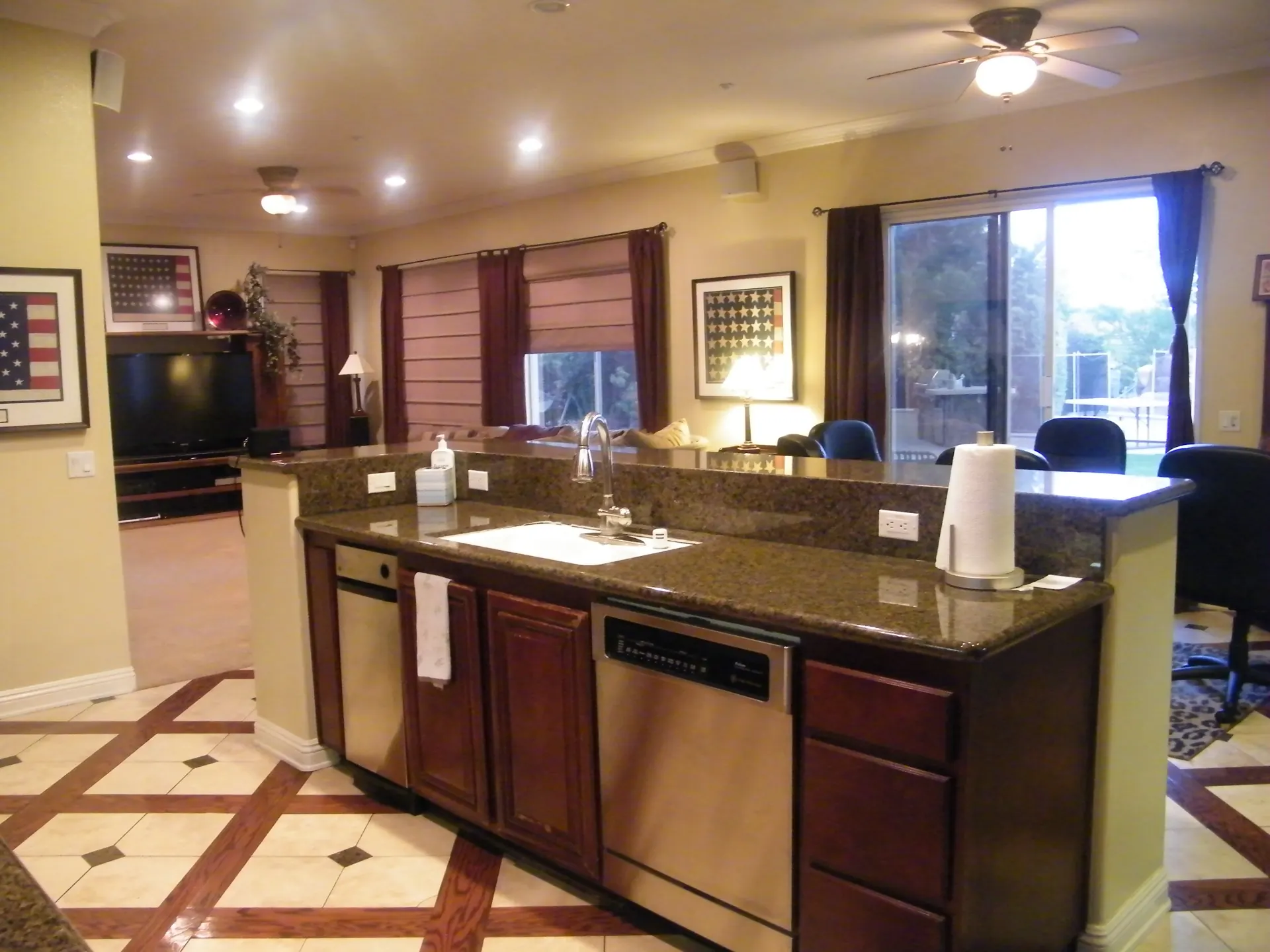
Say it's a Saturday night in late July and your tenant texts that the kitchen sink is backing up into the dishwasher. Nobody's hurt. The house is still livable for the weekend. But it's a plumbing failure, and under California law, plumbing in good working order is part of what you owe a tenant every day of the lease.
Most owners I talk to know a rental has to be "habitable." Far fewer can name what's on the list, and almost nobody knows the list grew this year. If you've signed or renewed a lease since January 1, 2026, a working stove and refrigerator are now on it.
Here's what the law requires, what it lets a tenant do when a repair doesn't get made, and how we handle requests so an owner never ends up on the wrong side of any of it.
Key takeaways
- California Civil Code §1941.1 lists the conditions that make a rental untenantable: weatherproofing, plumbing and gas, hot and cold running water, heat, electrical, clean grounds free of vermin, trash receptacles, and safe floors and stairs.
- AB 628 added a working stove and refrigerator to that list for leases entered into, amended or extended on or after January 1, 2026. A recalled appliance doesn't count, and the owner has 30 days from notice of a recall to repair or replace it.
- If an owner doesn't fix a habitability problem within a reasonable time, a tenant may repair it and deduct the cost from rent, up to one month's rent and no more than twice in 12 months. Thirty days after notice is presumed reasonable, but a shorter wait can be justified.
- Once a code inspector gives written notice to repair and the problem is still there 35 days later without good cause, an owner can't collect rent, raise it or serve a three-day notice to pay or quit on that unit.
- A tenant who complains about conditions is protected from rent increases, reduced services and eviction for 180 days, unless the owner has a separate good-faith reason.
- The tenant has duties too. If a tenant's own neglect or damage substantially contributed to the problem, the owner's repair duty doesn't arise.
What the habitability list covers
Civil Code §1941 requires the owner of a building meant for people to live in to put it in a condition fit for occupation and to repair the dilapidations that make it untenantable. Section 1941.1 is where the specifics live. A unit is considered untenantable if it substantially lacks any of these:
| Requirement | What it means in practice |
|---|---|
| Weather protection | Roof and exterior walls that keep water out, unbroken windows and doors |
| Plumbing and gas | Up to the code in effect when installed, kept in good working order |
| Water | Hot and cold running water, connected to an approved sewage system |
| Heating | Up to code when installed, kept in good working order |
| Electrical | Wiring, lighting and equipment up to code when installed, in good working order |
| Clean grounds | Clean and free of debris, rodents and vermin at the start of the lease, and in areas the owner controls |
| Trash receptacles | Enough clean ones at move-in, and serviceable ones kept available |
| Floors, stairs, railings | Kept in good repair |
| Stove (leases from January 1, 2026) | In good working order and able to safely generate heat for cooking |
| Refrigerator (leases from January 1, 2026) | In good working order and able to safely store food |
Two things on that list surprise owners.
Heat is there. Air conditioning isn't. That doesn't mean you can shrug off a dead AC unit in an Inland Empire summer when the house came with one — the lease is its own obligation, and a tenant sweating through August in a home you rented as air-conditioned has a fair complaint. It just means the statewide habitability standard doesn't name it.
The other is mold. Health and Safety Code §17920.3 lists "visible mold growth, as determined by a health officer or a code enforcement officer" and "dampness of habitable rooms" among the conditions that can make a building substandard. Minor mold on surfaces that get wet as part of their normal use, like a shower, is excluded. Mold is almost always a water problem first, so the fix starts with finding the leak.
The 2026 appliance change
AB 628 (Chapter 342, Statutes of 2025) added paragraphs (10) and (11) to §1941.1. For any lease entered into, amended or extended on or after January 1, 2026, the owner has to provide a stove and a refrigerator in good working order.
Three details matter:
- Recalls count as broken. A stove or refrigerator subject to a recall by the manufacturer or a public entity doesn't meet the standard. Once you receive notice of a recall, you have 30 days to repair or replace it.
- The tenant can supply the refrigerator, by choice only. The lease can say the tenant provides and maintains their own refrigerator, with the acknowledgment the statute requires. You can't make that a condition of renting the unit, and the tenant can end the arrangement with 30 days' written notice, at which point you install a working one.
- Renewals bring older leases in. A lease signed in 2024 that's extended or amended this year falls under the new rule. Most single-family rentals already come with both appliances, but a house where the last tenant took their own fridge when they left is a common gap.
The law carves out permanent supportive housing, single-room occupancy units, residential hotels and units with shared or communal kitchens. Ordinary single-family rentals and apartments aren't in those exceptions.
What a tenant can do when a repair waits
This is the part that turns a $400 repair into a much bigger problem.
Repair and deduct. Under Civil Code §1942, if a tenant gives notice, written or oral, of a condition that makes the place untenantable and the owner doesn't fix it within a reasonable time, the tenant can hire the repair and subtract the cost from rent. The cap is one month's rent, and a tenant can use the remedy no more than twice in any 12-month period. The tenant can also move out instead and stop owing rent. If the tenant waits 30 days after notice, the law presumes that was a reasonable time. A tenant can act sooner when the circumstances call for it, and a gas leak or a house with no water calls for it.
The implied warranty. In Green v. Superior Court (1974), the California Supreme Court held that every residential lease carries an implied warranty of habitability, and that a tenant can raise a breach of it as a defense when the owner files an unlawful detainer for unpaid rent. In practice, an eviction for nonpayment can fail if the tenant shows the unit wasn't habitable.
Code enforcement. Civil Code §1942.4 goes further once a city or county inspector is involved. If an inspector gives the owner written notice to repair, the conditions are still there 35 days later without good cause, and the tenant didn't cause them, the owner can't demand or collect rent, issue a rent increase notice or serve a three-day notice to pay or quit. The tenant can recover actual damages plus $100 to $5,000, and the prevailing party recovers attorney's fees.
Retaliation. Civil Code §1942.5 protects a tenant who complains to the owner, files a complaint with an agency or uses repair and deduct. For 180 days afterward, an owner can't raise the rent, cut services or try to recover possession because of it. The owner can still act on a separate, good-faith ground, but has to prove it if the tenant disputes it. That's one more reason to put any planned increase on paper on its own merits, following the rent increase notice rules, well before a repair dispute could ever come up.
The tenant's side of the ledger
Habitability runs both ways. Civil Code §1941.2 requires the tenant to keep their part of the home clean and sanitary, dispose of garbage properly, use the plumbing, gas and electrical fixtures properly, avoid damaging the property (and keep guests from doing it), and use each room for its intended purpose.
If a tenant substantially breaks one of those duties and that substantially contributes to the problem, the owner's duty to repair under §1941 and §1942 doesn't arise. A drain clogged with months of cooking grease is a different conversation from a drain that failed because the line under the slab collapsed. The cost still has to be handled correctly, and it may come out of the security deposit at move-out if it's documented. Our post on security deposit itemization covers what can be deducted and how.
How we handle repair requests
The statute doesn't set a clock for most repairs. "A reasonable time" depends on the problem. So we set our own, and we sort every request the moment it comes in.
Emergencies are anything that threatens health, safety or the building itself: no water, a gas smell, a sewage backup, no heat in winter, an active roof leak, a dead refrigerator full of food. A vendor goes out the same day.
Habitability items that aren't emergencies get scheduled within days, not weeks. A burner that won't light, a slow leak under a sink, a window that won't latch.
Everything else goes into routine maintenance with a date the tenant can see.
What protects the owner is the record. Every request gets a timestamp, the vendor's arrival and completion are logged, and photos go in the file. Across the many properties we've managed, the pattern holds: the habitability disputes that turn expensive are the ones where nobody can show when a problem was reported or when it was fixed. A clean log answers a repair-and-deduct claim, a retaliation claim and a deposit dispute with the same set of records.
We now check recall status on the stove and refrigerator at every turn and every renewal, too. It takes a model number and a few minutes, and it closes the gap the new law opened.
Where to go from here
If you manage your own rental and aren't sure your lease, your appliances or your repair process would hold up, it's worth sorting out before a tenant's text arrives on a Saturday night. You can see what we charge on our pricing page, read about how we work in Riverside, or stop by the office at 6700 Indiana Ave #130 in Riverside.
Common questions
- Is air conditioning required in a California rental?
- Not under the statewide habitability list. Civil Code section 1941.1 requires working heat, but it doesn't name air conditioning. If the home came with air conditioning and the lease includes it, keeping it working is part of the lease, and some cities add their own requirements, so check local code for the property's address.
- How long does a landlord have to make repairs in California?
- The law says a reasonable time, which depends on the problem. For the repair-and-deduct remedy, Civil Code section 1942 presumes 30 days after notice is reasonable, but a tenant may act sooner when circumstances require it. A gas leak, no water or a sewage backup should be handled the same day.
- Do I have to provide a refrigerator in my California rental?
- For a lease entered into, amended or extended on or after January 1, 2026, yes, along with a working stove. The tenant may choose to supply their own refrigerator if the lease includes the acknowledgment the statute requires, but you can't make that a condition of renting, and the tenant can switch back with 30 days' written notice.
- Can a tenant withhold rent for repairs in California?
- A tenant can raise a breach of the implied warranty of habitability as a defense to an eviction for unpaid rent, under Green v. Superior Court (1974). Separately, once a code inspector has given written notice and the problem stays unfixed 35 days later without good cause, Civil Code section 1942.4 bars the owner from collecting rent on that unit.
- Who pays for damage the tenant caused?
- Civil Code section 1941.2 sets out the tenant's duties, including using fixtures properly and not damaging the property. If a tenant's breach of those duties substantially contributed to the problem, the owner's repair duty under sections 1941 and 1942 doesn't arise. Documented tenant damage can be deducted from the security deposit at move-out.
Sources
- California Civil Code §1941: landlord's duty to keep a rental fit for occupation — retrieved October 22, 2026
- California Civil Code §1941.1: untenantable conditions, as amended by AB 628 — retrieved October 22, 2026
- AB 628 (Ch. 342, Stats. 2025): stove and refrigerator requirements, chaptered text — retrieved October 22, 2026
- California Civil Code §1941.2: tenant's obligations — retrieved October 22, 2026
- California Civil Code §1942: repair and deduct — retrieved October 22, 2026
- California Civil Code §1942.4: rent barred after uncorrected code notice — retrieved October 22, 2026
- California Civil Code §1942.5: retaliation — retrieved October 22, 2026
- California Health and Safety Code §17920.3: substandard buildings, including visible mold — retrieved October 22, 2026
- Green v. Superior Court (1974) 10 Cal.3d 616: implied warranty of habitability — retrieved October 22, 2026