
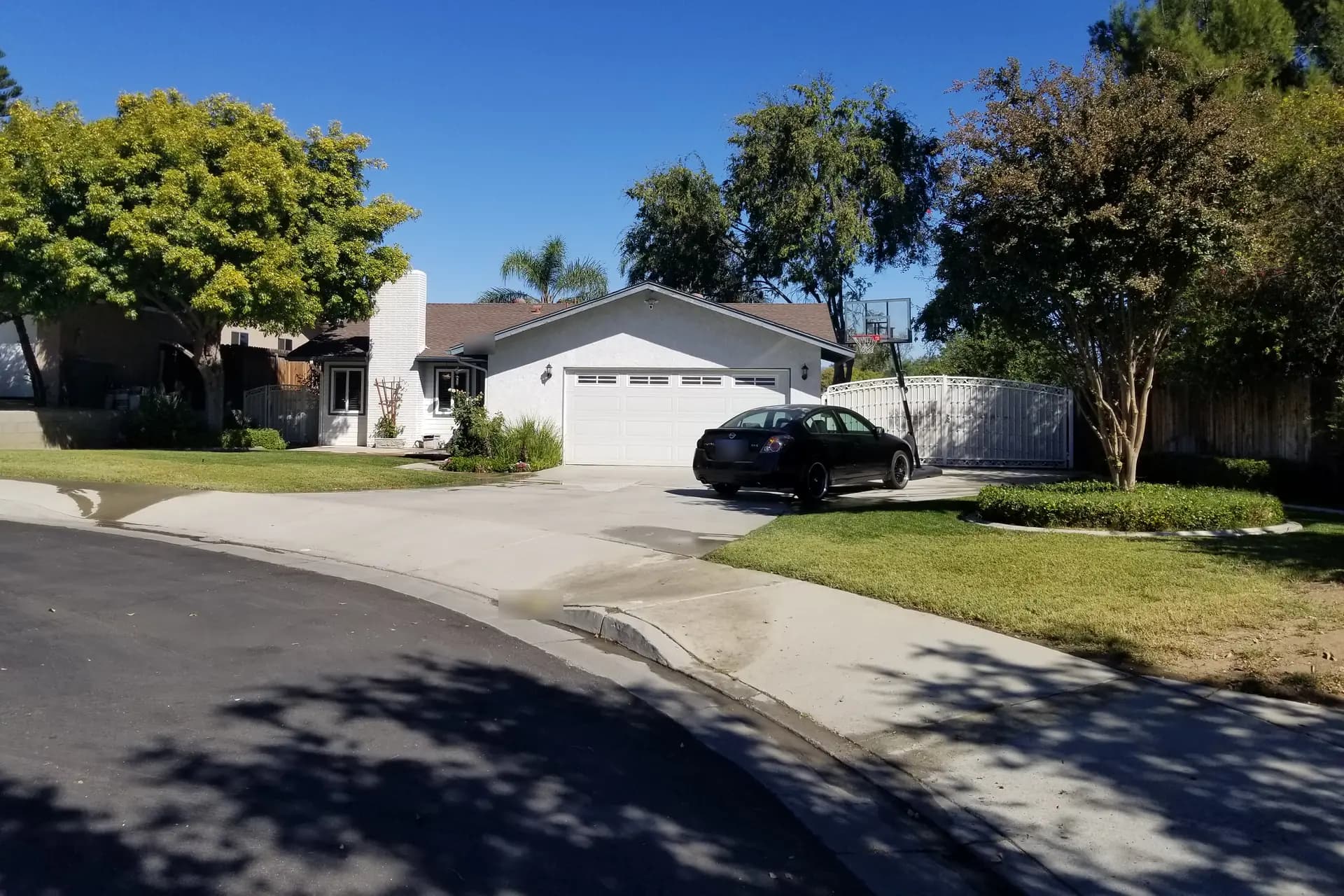
Say you take a job out of state, keep the house in Riverside, and rent it out. The lease gets signed, the tenant moves in, and the homeowners policy keeps renewing on autopay the way it has for years. The bill looks the same, so it's easy to assume the coverage is the same too.
Then there's a kitchen fire, or the tenant's guest falls on the back steps, and the wording of the policy starts to matter. A homeowners policy is written around a household that lives in the house. When the people living there pay you rent, several parts of that policy stop fitting the facts.
This is the gap worth closing the day a house becomes a rental. Here's what changes, what a landlord policy covers instead, and what to ask your agent before the first tenant moves in. We're property managers rather than insurance agents, so the policy itself is always a conversation with a licensed agent or broker.
Key takeaways
- A homeowners policy is built for an owner who lives in the home. Once the house is rented, tell your insurer and move to a policy written for rentals, usually called a landlord or dwelling policy.
- The National Association of Insurance Commissioners notes that many homeowners policies carry a business exclusion that can remove liability coverage, and renting a home out can count as business activity.
- A landlord policy can include fair rental value coverage, which replaces the rent you lose while a covered loss leaves the house unlivable.
- Your policy doesn't cover the tenant's belongings. The California Department of Insurance tells renters exactly that and points them to renters insurance.
- California's standard fire policy suspends coverage once a building has sat vacant or unoccupied for more than 60 consecutive days, so a long vacancy is an insurance question as well as a rent question.
- Liability coverage isn't automatic on a dwelling policy, so ask for it by name.
Why the homeowners policy stops fitting
The coverages on a homeowners declarations page assume one thing: you live there. The California Department of Insurance describes personal property coverage as protection for "the contents of your home and other personal belongings owned by you." Loss of use pays your living costs when a covered loss makes your residence uninhabitable, and liability responds when you or a member of your household is responsible for someone's injury.
Rent the house out and those assumptions fall away one at a time. Most of your belongings left with you. You won't need a hotel if the rental burns, because you don't live there. And the household in the house now belongs to someone else.
The bigger issue is what the insurer was told. A policy is priced on the facts the insurer has, and who occupies the home is one of the main ones. The NAIC's paper on home-sharing warns that many homeowners policies contain a business exclusion that "generally eliminates liability coverage" for business activities, and that renting to others can count as a business under some policies. Its advice to owners is to contact their insurer or agent and ask whether the rental use is covered.
California's standard fire policy, the baseline form written into Insurance Code §2071, adds a harder edge: the policy is void if the insured willfully concealed a material fact, before or after a loss. Whether a missing tenant rises to that level is a legal question, and it isn't one you want to test with a fire claim.
None of this means every homeowners policy denies every claim on a rental. Forms differ, and some insurers will cover a rented home with an endorsement. The point is to know which kind of policy you have before you ever need to file.
What a landlord policy covers instead
Insurers write rentals on a dwelling policy, often sold as landlord insurance. The forms vary by company, but the pieces to look for are consistent.
| Coverage | Homeowners policy (you live there) | Landlord or dwelling policy (rented) |
|---|---|---|
| The structure | Yes | Yes, the center of the policy |
| Your belongings in the home | Yes | Limited; landlord furnishings often need an endorsement |
| The tenant's belongings | No | No; that's the tenant's renters policy |
| Your living costs if displaced | Yes | Not needed, since you don't live there |
| Rent lost after a covered loss | Only for a part of the home you rent out | Fair rental value coverage |
| Liability | Included | Often optional; add it |
The structure. The house and attached structures are the heart of a dwelling policy. Some dwelling forms are named-peril, meaning they cover only the causes of loss the policy lists, so read that list before you assume a burst pipe or a vandalized door is covered.
Fair rental value. This is the coverage owners most often forget to ask about — and the one they're most glad to have after a fire. Under a dwelling policy, if a rented home becomes uninhabitable from a covered peril, fair rental value coverage reimburses the lost rent, minus any expenses that stop while the house is empty, for the time it takes to repair.
Take a hypothetical house renting for $2,600 a month. A kitchen fire forces the tenant out for three months of repairs. Without fair rental value, that's $7,800 of rent that never arrives while you're also managing a rebuild. With it, the policy covers most of that gap. Our post on unit turn cost and timeline shows how quickly lost rent outruns a repair bill even on an ordinary turn.
Liability. The NAIC notes that personal liability and medical payments coverage are often excluded from a dwelling policy but can be added by endorsement. A tenant's guest trips on a lifted section of walkway and sues the owner. That's the claim liability coverage exists for, and it's the one owners least expect when they think of a rental as a building rather than a business.
What you left behind. If the rental is furnished, or you left a washer, dryer or refrigerator that you own, ask how the policy treats landlord-owned contents. The NAIC says dwelling policies typically exclude them unless they're added by endorsement.
The tenant's belongings are the tenant's policy
Across the rentals we manage, one of the most common questions after a leak or a break-in is whether the owner's insurance covers the tenant's things. It doesn't. The Department of Insurance says it directly to renters: "Your landlord does not provide insurance for your personal property." It points them to renters insurance, which carries its own liability and loss-of-use coverage.
That helps the owner as well. A tenant with renters insurance has somewhere to turn after a loss besides you, and the liability part of a renters policy can respond when the tenant causes damage to someone else. Whether to require renters insurance is a decision to make with your manager before the lease is drafted, and whatever you decide should apply the same way to every applicant.
Vacancy is an insurance problem too
Long vacancies carry a risk owners rarely connect to their policy. California's standard fire policy says the insurer isn't liable for a loss while a building, "whether intended for occupancy by owner or tenant, is vacant or unoccupied beyond a period of 60 consecutive days." Your own policy may word its vacancy clause differently, so check it, but 60 days is the mark in the state's baseline form.
A well-planned turn never comes near that. The exposure shows up when a house sits empty for a long stretch — through a remodel, a pending sale or a listing that won't move. If you expect a vacancy to run past six or seven weeks, call your agent well before day 60 and ask about a vacancy endorsement or a vacant-property policy.
Fire country, the FAIR Plan, and its limits
In parts of the Inland Empire near open brush, finding a carrier willing to write a rental can take some work. The California FAIR Plan, the pool of insurers that serves as the market of last resort, writes dwelling policies on rentals. Its site lists one-to-four-unit dwellings rented to a tenant for at least one year.
Know what that policy is. The FAIR Plan dwelling policy is named-peril, covering fire, lightning, internal explosion and smoke, with vandalism available for an added premium. The FAIR Plan itself suggests pairing it with a difference in conditions policy, plus flood or earthquake coverage, to fill in the rest. Liability isn't among the coverages it lists, so plan on a separate policy for that.
What to ask your agent before the first tenant moves in
Bring this list and your current declarations page:
- Is this house now written as a rental, and does the declarations page show it?
- Is the form named-peril or open-peril?
- Is fair rental value included, and how long will it pay?
- What is my liability limit, and does it apply to a rented home?
- What does the policy say about vacancy, and after how many days?
- Does it cover anything I own inside the house, like appliances or furniture?
- Does the dwelling limit reflect what it would cost to rebuild today?
- Would an umbrella policy make sense on top of this?
Then give your property manager a copy of the declarations page. When something goes wrong at the house, the manager is usually the first call, and knowing the carrier and coverages up front means the claim starts the same day.
Where a manager fits
Insurance is the owner's contract with the carrier, and we don't sell it. What a manager adds is the record around it: documented condition at move-in and move-out, dated photos before and after repairs, maintenance requests handled and logged, and a tenant file showing the house was occupied and cared for. That record is what an adjuster asks to see, and it's the same documentation we keep for habitability and deposit purposes.
If you're turning a home you used to live in into a rental, our post on what a property manager does covers the rest of what changes, and our pricing page lays out what management costs.
Common questions
- Can I keep my homeowners insurance if I rent out my house?
- Usually not as it stands. A homeowners policy is written for an owner who lives in the home, and the NAIC notes that many carry a business exclusion that can remove liability coverage when a home is rented. Tell your insurer before the tenant moves in. Most will move the house to a landlord or dwelling policy, and some will allow it under an endorsement.
- Does landlord insurance cover the tenant's belongings?
- No. The California Department of Insurance tells renters that their landlord does not provide insurance for their personal property. Tenants cover their own belongings, and their own liability, with renters insurance.
- What is fair rental value coverage?
- It's the part of a dwelling policy that replaces lost rent when a covered loss, such as a fire, leaves the rental uninhabitable. It pays the rent you would have collected, minus expenses that stop while the house is empty, for the time it takes to make the home livable again.
- Is landlord insurance more expensive than homeowners insurance?
- It often is, because a landlord policy can include coverages a homeowners policy doesn't, such as fair rental value, and it insures a home someone else lives in. Compare quotes on the coverages you need rather than on price alone, and make sure liability is included.
- What happens to my coverage if the rental sits vacant?
- California's standard fire policy says the insurer isn't liable for a loss while a building is vacant or unoccupied beyond 60 consecutive days. Your own policy may word this differently, so check it, and call your agent before day 60 about a vacancy endorsement if a long vacancy is coming.
Sources
- California Department of Insurance: Residential Insurance, Homeowners and Renters — retrieved November 5, 2026
- California Department of Insurance: Renters Insurance — retrieved November 5, 2026
- California Insurance Code §2071: standard form fire insurance policy (concealment, vacancy) — retrieved November 5, 2026
- NAIC: Insurance Implications of Home-Sharing (business exclusion, dwelling and landlord policies) — retrieved November 5, 2026
- California FAIR Plan: Dwelling policy — retrieved November 5, 2026
- IRMI: Fair rental value coverage — retrieved November 5, 2026